ThickClient is an optional add-on for the Secure Edge and Remote Access platform. It provides secure connections to on-premises systems through native applications on your computer, allowing remote access from anywhere. To use these device connections, you must run Neeve Access Agent on the computer you’ll use for remote access.
To learn more or enable ThickClient, contact success@neeve.ai.
Create a TCP/UDP connection
Once ThickClient is enabled in your environment, follow these steps to define a TCP/UDP connection in the Remote Access portal for a new device.
If you are modifying connections for an existing device, skip ahead to Add a TCP/UDP connection to an existing device.
From the Remote Access Portal left menu, select the Devices icon to open the Device Endpoints page.
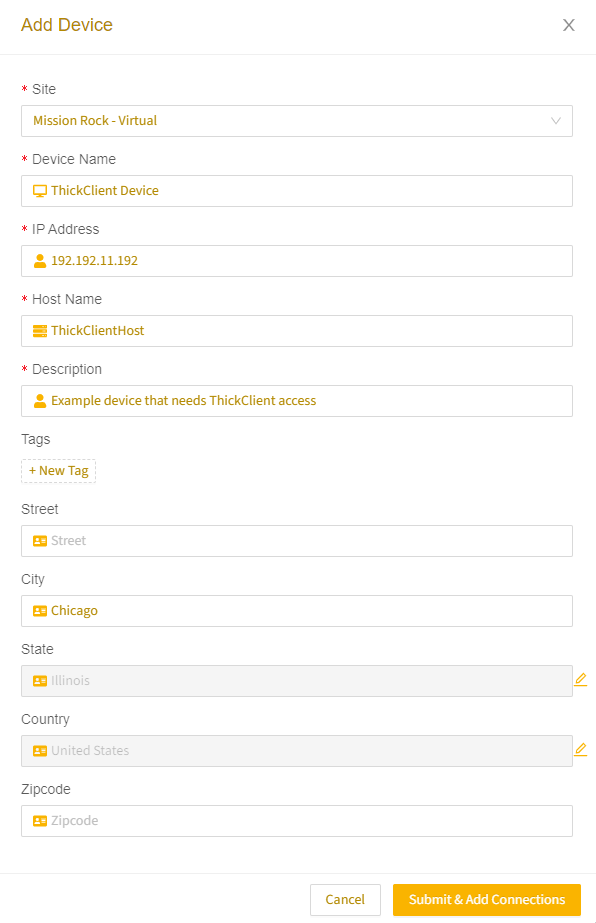
From the top right of the Device Endpoints page, select + Add Device.
Complete the Add Device form fields and select Submit & Add Connections.
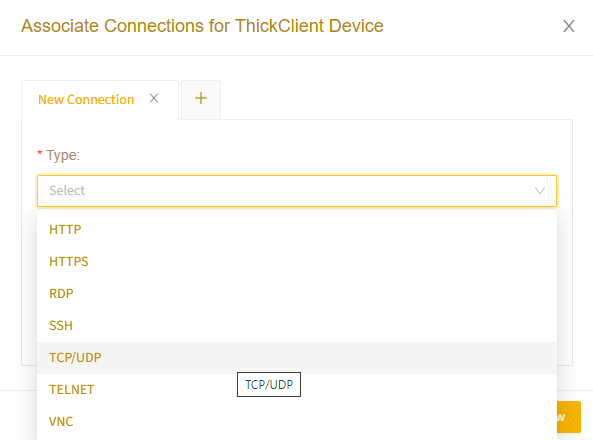
In the Associate Connections for ThickClient Device dialog, choose TCP/UDP from the Type dropdown.
Populate the required data fields:
Provide a name.
Define the port range that is required to access the device. You can specify a single port or a range. For multiple, discrete ports, create separate connections (comma delimiting is not supported).
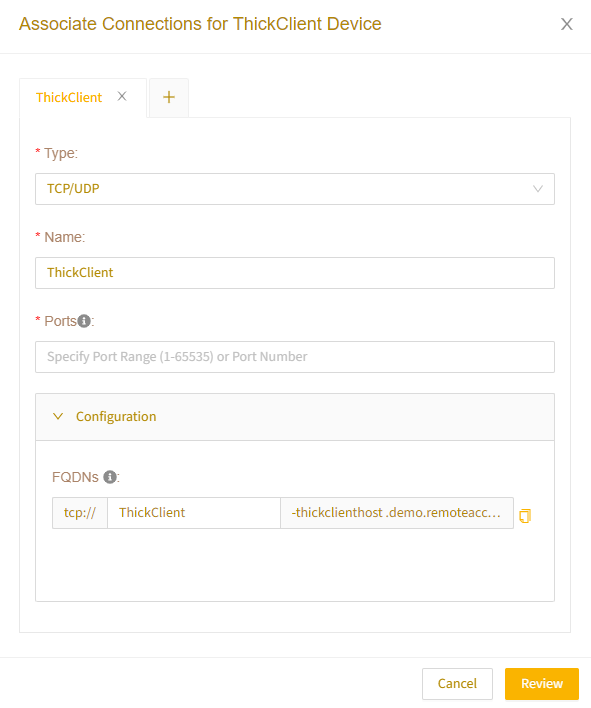
Select Review and then select Submit & Add to Group.
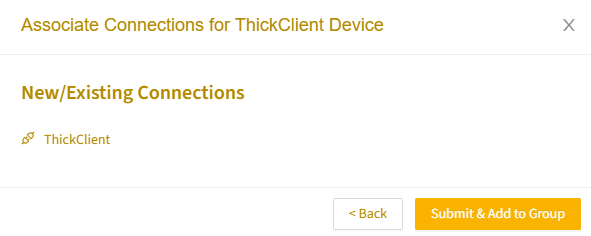
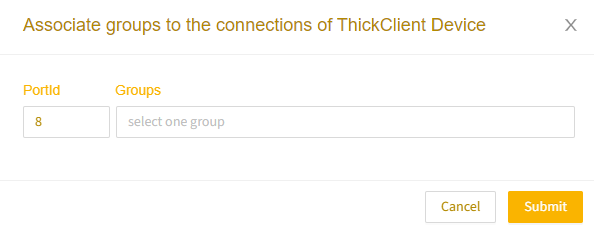
Assign the device to the appropriate groups, and then select Submit to finalize the connection.
Add a TCP/UDP connection to an existing device
If a device already exists in the Remote Access Portal, use these steps to add a TCP/UDP connection:
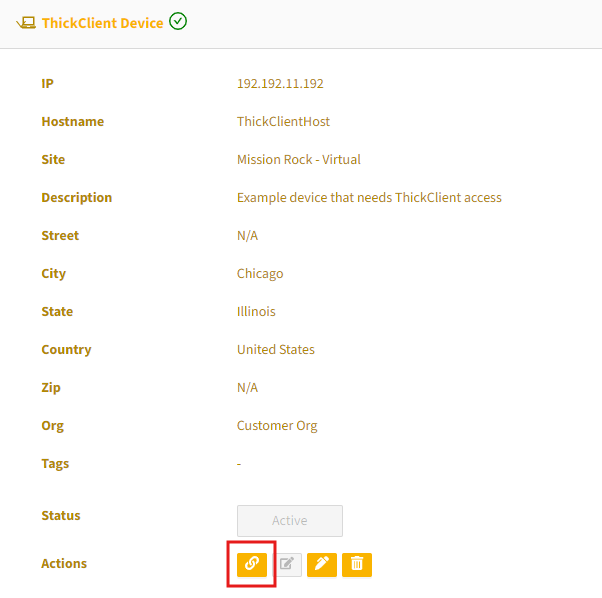
Log in to the Remote Access Portal and on the Device Endpoints page, select the device.
Expand the device details, and from the Actions menu, select the Modify Connections icon.
In the Associate Connections for ThickClient Device dialog box, select the plus icon (+). Choose TCP/UDP from the Type dropdown.
Populate the required data fields:
Provide a name.
Define the port range that is required to access the device. You can specify a single port or a range. For multiple, discrete ports, create separate connections (comma delimiting is not supported).
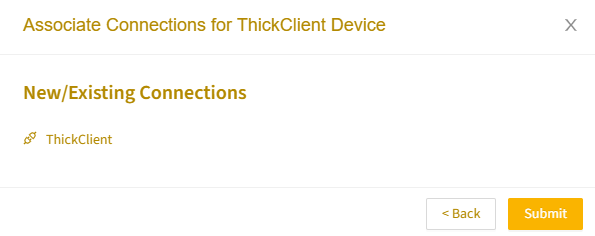
Select Review and then Submit.
Return to the device details page. Select the Modify Groups icon.
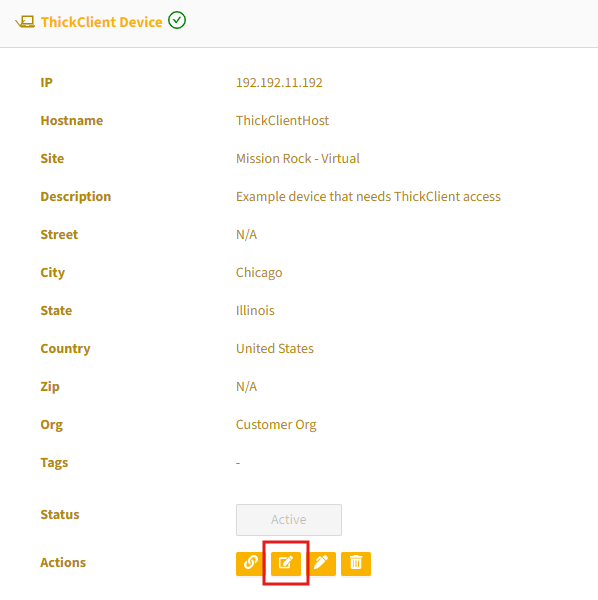
Assign the device to the appropriate groups and then select Submit.
Launch Remote Access Agent
This section explains how to install and run the Neeve Remote Access Agent app to access devices or networks with TCP/UDP connections.
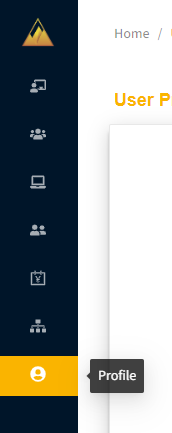
Log in to the Remote Access Portal and go to the Profile page to view available connections.
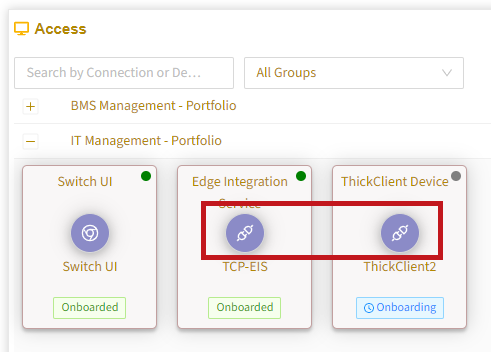
Under Access, you’ll see connections for ThickClient device connections, identified by the plug icon on the connection tile:
Networks show the network icon on the connection tile: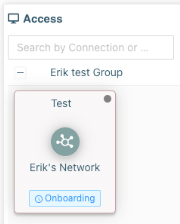
Select the desired connection. If Remote Access Agent (the remote agent) is not installed, you will be prompted to download it.
Download and install Remote Access Agent for your operating system. Note the Realm in the agent UI, which you will need in the next step.
If already installed, simply launch the application..png)
Launch Remote Access Agent and enter your user name (typically the email you use to log into the Remote Access portal) and the realm that you noted in the previous step.
.png)
Select Login and then enter your Remote Access credentials.
Wait a few moments for the agent to establish the connection. The agent status should show as Running. If you encounter a timeout, you may need to reauthenticate..png)
Once the agent status shows as Running, you can access the device via local applications.
Tip
Remember to quit Remote Access Agent when you finish your work. If not, it will continue running in the background and consume resources.
All assigned TCP/UDP connections will be available in Remote Access Agent. You can find your available connections in one of two ways, depending on how your environment is configured.
Either, you will have network-level access and see all available connections listed under the Apps tab in the agent UI:
.png)
Or, you will have single IP access. In this case, you must first go to the Settings tab and select the site to connect to (formatted as “site-network”), and then select Apps:
.png)
Connect to a device using the desktop application
When using your desktop application, you will connect based on one of the two scenarios mentioned in the last step above.
If your organization has configured network access, you can use the IP address of the target connection.
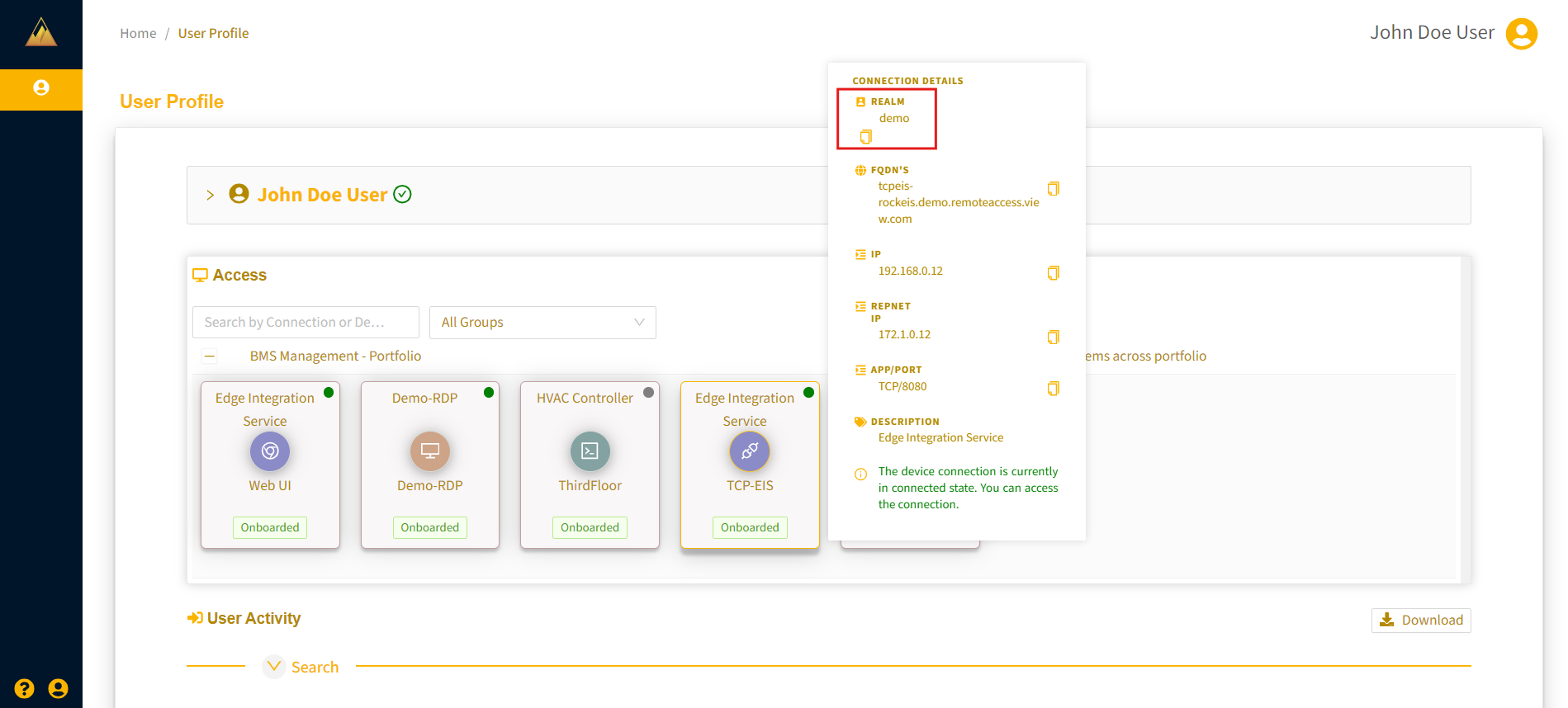
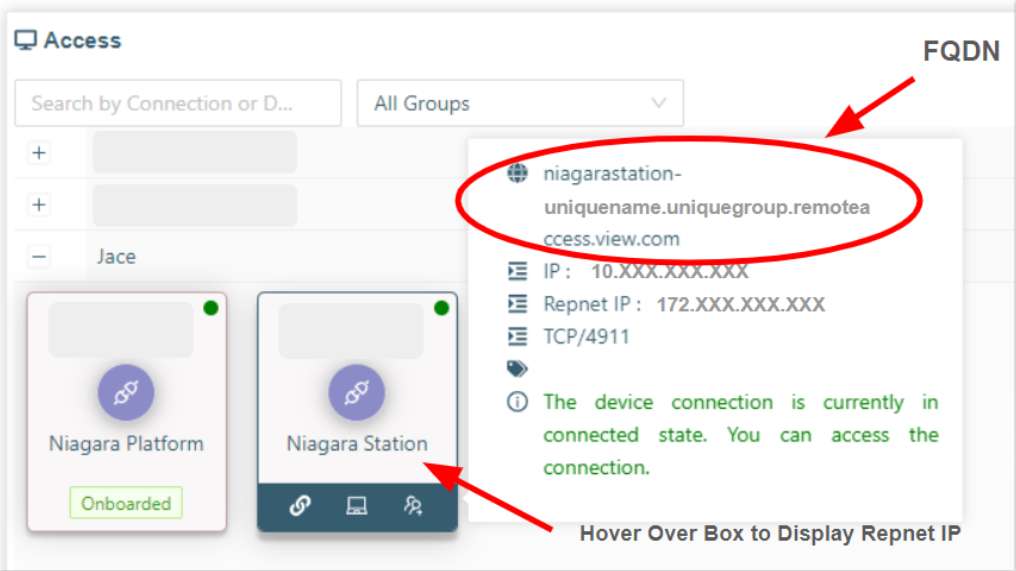
If your organization has configured single IP access, you can’t use the IP address of the target connection. Instead, you can connect via RepNet IP or Fully Qualified Domain Name (FQDN)—whichever is appropriate for your application. To see the RepNet IP and FQDN, hover over the connection tile in Remote Access, as shown in the example below. You can copy the information from the pop-up.
For support, contact the Neeve team at support@neeve.ai.
Get realm values
Realm values are used when logging into the remote agent application. To get realm values:
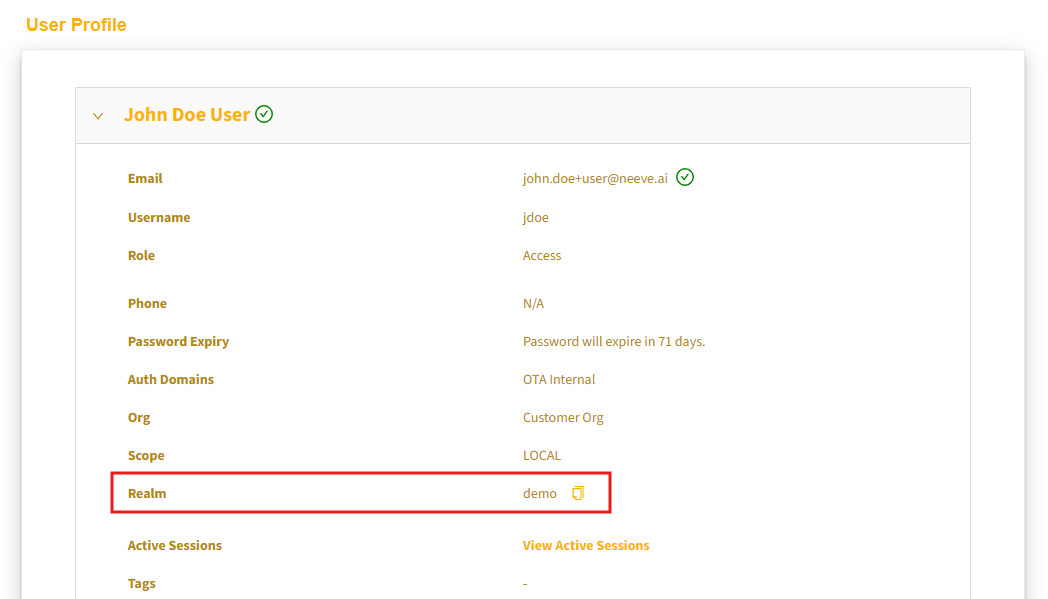
From the user profile: From the Users page, select a user to open their profile, than expand the panel next to the user icon to find and copy their realm.
From a TCP connection: From the Profile page, under Access, hover over a connection tile (TCP connection), and the realm will appear in the details pop-up.